

Why Clapping Games Matter in Early Childhood
An ABC’s Clapping Game for Preschoolers | Crossing the Midline & Rhythm
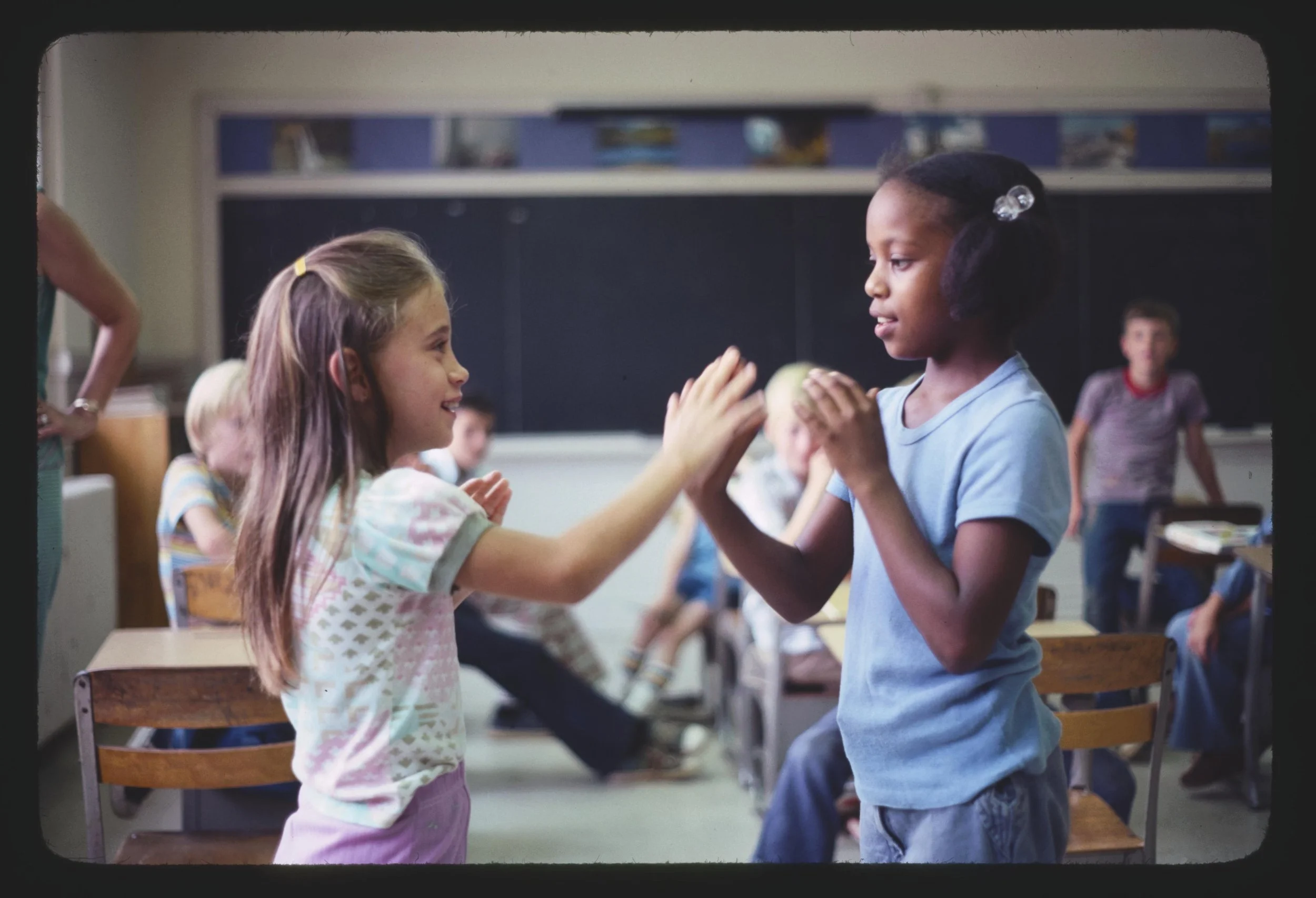
I could probably write a dissertation on clapping games. I believe they are one of the most undervalued and least spoken about musical activities available to children. They also demonstrate something that so many of the great educational philosophies have long spoken about: children learn best through play. Not worksheets. Not drills. Not flashcards. Not by optimizing every minute of their day—but through PLAY. We are little mammals, after all, and a quick look at the behavior of young mammals tells us something very important. Play is not time taken away from development. Play is one of the primary ways development actually happens.
Until fairly recently, it was commonplace to see children inventing and passing along musical games and chants in playgrounds, sidewalks and backyards. Today, all types of free play are disappearing and the reasons are numerous. One could blame technology, overscheduling, less time outdoors, fewer mixed-age groups of children, less unstructured time together etc etc, all valid root causes for sure. However, I don’t want to get lost in the weeds looking for something to blame and would prefer to focus on the positive changes we can make in our own homes, where we still have influence and impact. I believe the play of one child can create a ripple effect. Teach one child a clapping game and before long that child may be teaching it to a sibling, cousin or friend. I have seen this happen among families around me and among those of you who have found me through social media. When I started posting clapping games over a year ago on social media, so many of you told me about how much joy you were finding in this play again and I have to say it has been one of the nicest aspects of social media. It has been a lovely reminder of the good social media can accomplish when it is used well. Although my message and work extends far beyond clapping games, I am very proud to be known for helping families rediscover them again (at least in my small corner of the internet).
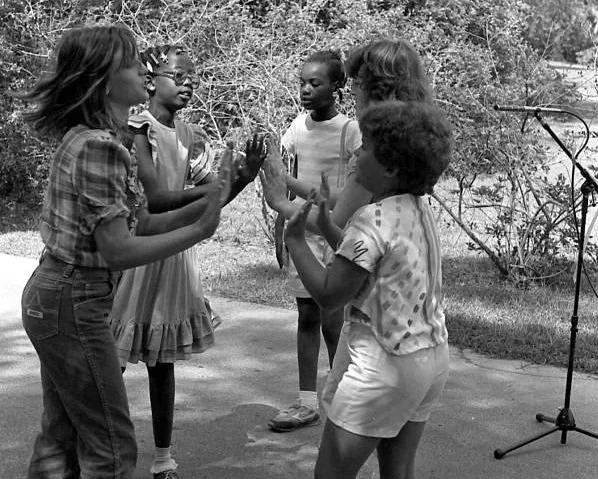
What looks like play is doing a remarkable amount of work.
Teachers have been saying for a long time now that they are seeing motor issues that were not present in the classroom to this degree—ever. So many music teachers have messaged me saying that many, many children are unable to keep a steady beat in elementary school—something that would have been unheard of a few decades back. And the truth is that keeping a beat, crossing the midline, are in fact, essential skills for not just music, but reading and writing!
Clapping games offer a child a way to practice so many skills without turning them into isolated exercises or drills. They are learning through play how to: keep a steady beat, coordinate the hands and eyes, cross the midline of the body, remember words and movement sequences, building concentration, anticipating what comes next, taking turns, adjusting their timing when they get out of sync and persisting and beginning again after making a mistake. All these abilities matter in every aspect of life and not just for musical proficiency.
When children clap across the body they coordinate movement between the left and right side which is the type of bilateral coordination used in everyday life and necessary for reading, writing, getting dressed and more. And also, beyond the physical component of clapping games is the language component which often involves rhyming, syllable play and patterns that help lay important pre-literacy skills. All that silly, sing-song syllable play and chanting is gold for the auditory system and strengthens phonemic awareness.
Beyond the auditorial and motor skills development, one of my favorite aspects of clapping games is that the “mistakes” that can occur actually have immense value in of themselves. As children play clapping games they usually become faster, sillier and more complicated until someone “messes up.” It results in laughter and shared connections as children learn to reorganize themselves and begin again, not letting themselves be deterred by a mistake. What a life lesson! The experience of clapping games, where children have to look at each other, pay attention, and move in synchrony creates this magical embodied experience for them where they see what cooperation in action looks like.
I have shared many clapping games on social media, created a curated selection with tutorials in my early childhood music method and will continue to keep sharing, even as I speak more about my elementary homeschool music curriculum, Living with the Muses, because I believe this play is essential— and maybe needed now more than ever. The end goal is that by teaching the clapping games we knew growing up to our own children, they will then pass them on to their friends, reinvent them, and ultimately create their own new ones that will reflect the history and time of their own generation.
A New Way to Sing the ABC’s as a Clapping Game
I happened upon this verse by Trevor Smith Westgarth and immediately knew it would make such a perfect little clapping game for my preschooler. What could be better than learning/reinforcing the ABC’s in this new way and working on the wonderful skills outlined above?! I took a little tiny liberty with changing his lyrics from sing to clap, but whichever way you choose to sing it, I hope you and your preschooler (or even older child) will enjoy learning this!
Walking the Alphabet
Trevor Smith Westgarth
A B C D E F G
Sing the alphabet with me
H I J K L M N
We’ll sing it again and again
O P Q R S T U
Fun for me and fun for you
U V W X Y Z
Now the alphabet’s been said.
[To the tune of Twinkle, Twinkle Little Star. Repeat the first four bars of the tune for H I J K L M N.]
Thank you so much for being here and look forward to hearing if you try this clapping game with your children.
Musically yours,
Veronica