Writing a Homeschool Music Curriculum
After a year and a half spent creating my first homeschool music curriculum, I’m returning to this littler corner of the internet to share the story behind Living with the Muses and the deeply personal letter that opens its pages.
Hello—long time readers! It has been a while since I have written here on my blog. We have a new name—Musings, and I couldn’t be more excited to start writing here again. The better part of a year and a half has been spent writing my first homeschool music curriculum, and now that I am on the other side and have a finished curriculum in my hands, I find myself constantly flipping through the pages in amazement. I don’t say this to boast, because truly, a huge part of this feels so surreal. I look incredulously at the finished book, and I have to say, I am so proud I could burst. Even if only a few families ever purchase and I don't retire on a Greek isle from sales ;) I can honestly say that I would do it over again, because the feeling I feel, and the excitement at the connections I made throughout writing this curriculum are worth every ounce of sleep I gave up writing into the night and early morning.
It started out as me scribbling ideas and thoughts in my little notebook beside homeschool lessons plans and endless to-do lists that never get done. I had been giving a lot of thought about how I wanted to teach my eldest the subject of music in a more formal way, now that he was in first grade. It was so exciting to see him grasp deeper concepts over the past year, and become truly interested in learning. I thought it was now time to start teaching music theory, as he had been learning music strictly through an aural and kinesthetic approach up to that point. I had not yet started teaching him to read music—and that was on purpose. As I started digging deeper into how I wanted him to learn—which was totally different than how I had learned—I kept coming back to how music is really integrated with everything else. I’ve always loved reading about Ancient Greece and its ideas about education. I slowly started ruminating on all of this, and I was begin to see that everything I loved about different educational philosophies could usually be traced back to Ancient Greece and its ideas.
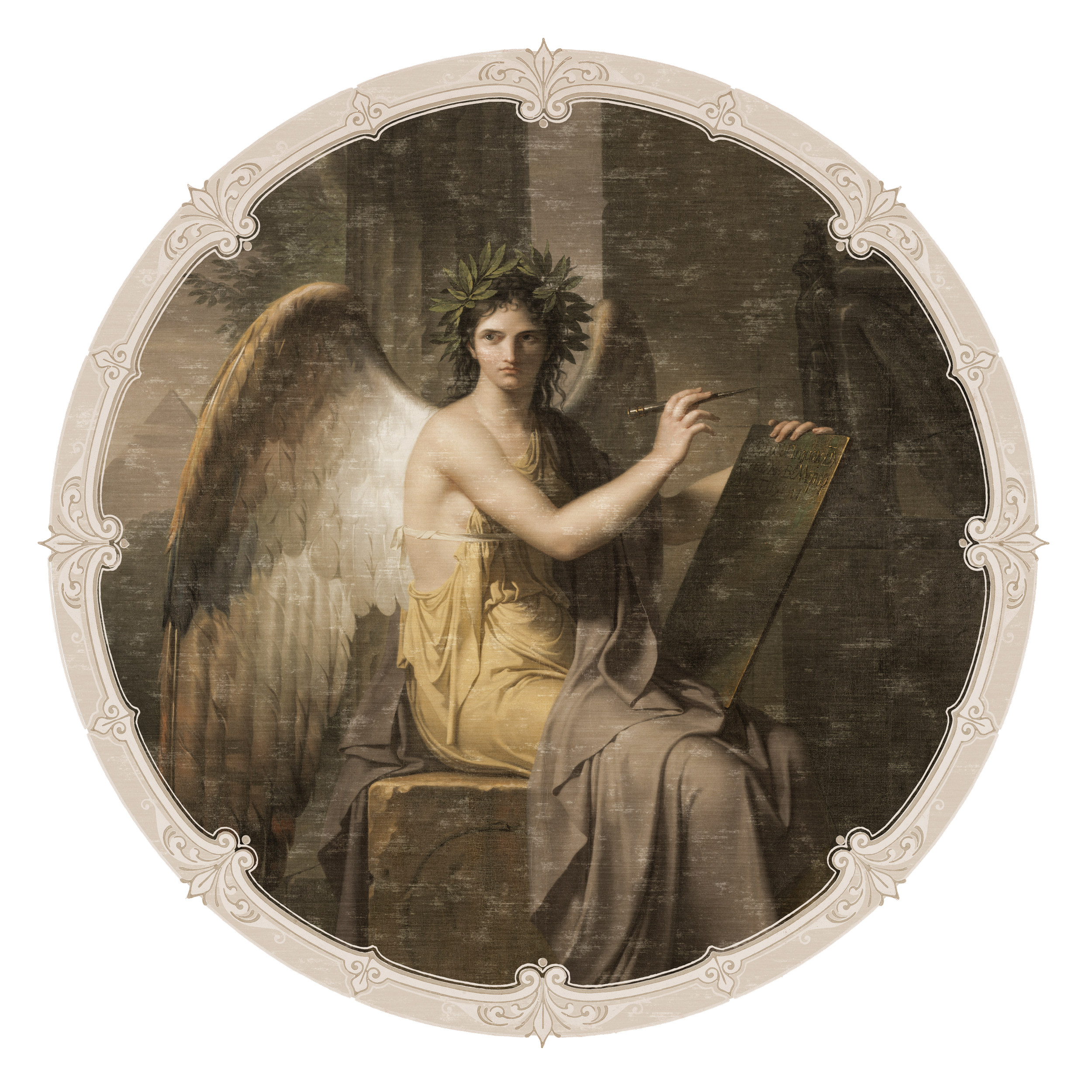
“He who has a taste for every sort of knowledge, and who is curious to learn and is never satisfied, may be justly termed a philosopher.”
—Plato, The Republic
I also luckily chose a Godfather for my youngest son who reads and speaks fluent Ancient Greek, Latin and many other languages. He is one of the most intelligent, humble and kind people I know, and I feel that I could pick his brain endlessly. He has given me so much food for thought over the years, and I am always in awe of his genuine love of knowledge and learning. He is exactly the kind of person I hope my children will emulate and who I aspire to be like, though I fear I would need to live a thousand years to get even remotely in the same sphere as him. You will see him carry a new (often old) book to Mass every Sunday—Socrates (in Greek!), poems by T.S. Eliot, you name it. He probably does not know this, but he inspired this curriculum in many ways. His love of learning, reading all forms of literature, art, music and making connections across subjects has inspired me beyond measure. So this curriculum is, in many ways, my attempt to pass on what he embodies: a genuine love of learning and the beautiful fruit of a true liberal arts education.
With that said, I thought I would share the opening letter from my new homeschool music curriculum, Living with the Muses. I wrote the letter when I was in the throes of learning new Adobe software, with my sweet little baby in her carrier on my chest and so many emotions coursing through me. I struggled to find the words to express everything this curriculum is to me and everything I hope it will be to many families. It’s so incredibly personal to me, and with every email, comment and message that comes my way celebrating my vision, I do a happy dance wherever I am and blink eyes rapidly that seem to well up without regard to where I may be at the time.
Without further ado, my letter to the families who purchased Living with the Muses, Volume I.
Dear Families,
I never dreamed I would one day publish my own music curriculum and it certainly was not something I imagined I would be able to accomplish in this season of motherhood. Between mothering a new baby and three sons, homeschooling, my business and juggling social media, I think I have a strong dash of delusion to thank for taking this on. Of course it goes without saying, none of this would be possible without my unicorn of a husband who took over doing dinner and dishes for months on end.
If the past eight years have taught me anything, it is that motherhood has a way of changing us for the better. It stretches us creatively, emboldens us and strengthens us if we allow it. Things you never thought possible become not only possible, but necessary, because they are for your children. So here I am with a two month old baby snoozing on my chest and imaginary battles being played out at the highest decibel levels in the living room as I type away, hoping beyond measure that what I have created is beautiful and inspired.
The idea for Magical Music Method was born when I was pregnant with my first child. I wanted my children to know music the same way they learned to speak, naturally, joyfully and as an ordinary part of everyday family life. I wanted music to be something they lived with and that would cultivate their own love of beauty. As my children grew, so did that vision. When my eldest reached grade school I found myself asking, ‘What comes next?’
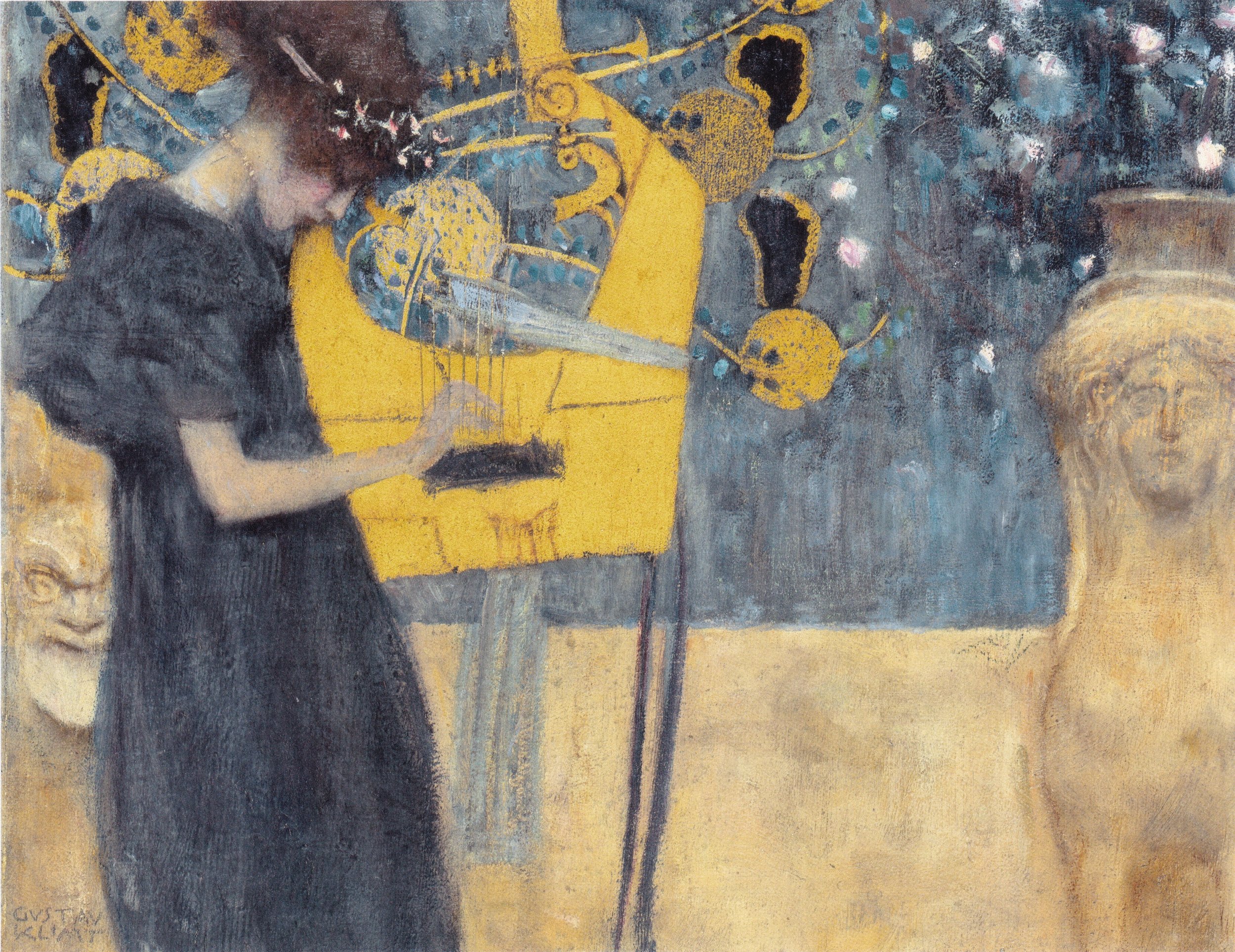
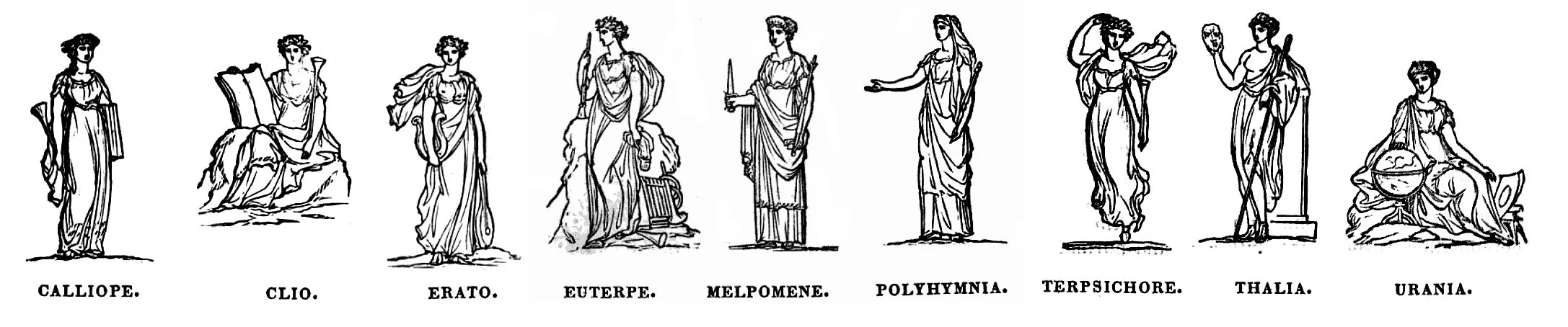
This curriculum is my answer. As I was writing over the course of the past year, I had written down An Integrated Music Curriculum as the working title of this project. It sounded boring, but I thought it was pretty accurate. I’m not teaching ‘Music Appreciation’, or just ‘Music History’, nor am I just teaching ‘Music Theory’, rather I am teaching music through the entire lens of the arts. Like the ancient Greeks! The Greeks believed in the nine muses, each intrinsically linked to music. It would be unimaginable in ancient Greece to learn music without learning poetry, and learn history without song, and to study astronomy without acknowledging the mathematical harmony of the universe. That was when it hit me – Living with the Muses. As soon as I thought of it, I knew that was it. I had nailed my entire music philosophy in one title. Afterall, the word music comes directly from the ancient Greek word, mousikē, meaning, art of the Muses. At the risk of sounding like the Dad from “My Big Fat Greek Wedding,” I’ll digress, but I think you may start to see the underpinning philosophy behind Living with the Muses.
This first volume is part of a three-volume course of study for Grades 1—6, that is meant to be lived with and revisited over and over again. Here your family will learn music, art, poetry and song together. Thank you for welcoming my curriculum into your home. I am deeply grateful that you entrusted me to share with you–mousikē.
With gratitude,
Veronica
If you made it to the end of this, thank you so much for being here. Every share, comment and purchase helps me continue the crazy endeavor of creating content that often feels like throwing a teaspoon of water into the expanse of the sea.
GIVEAWAY CLOSED. Winner selected below. As a token of my gratitude, please leave a comment with your own musing and include, if you like, “I would love a hardcopy of the homeschool music curriculum." I will choose one reader at random on September 10, 2026 @10:00PM EST and send them a hard copy of my curriculum.
Teaching Kids About Time 🕰 Through Music + Art 🎶
If you want a child to remember something,
put it to song. Music
makes everything “stick.”
I have been teaching my eldest about the clock and I wanted to share this fun musical lesson I created that incorporates music and art.
Understanding the Concept of a “Second.”
The concept of time (seconds, minutes and hours) is a very abstract idea to most children. They naturally do not keep track of time like adults, and live in the moment. When teaching about how to tell the time, it is enormously helpful to bring the idea of “time” into the body and give it a concrete meaning that makes sense to a child.
This is where music and movement can shine! Music is time and children often understand music organically and can feel the pulse of music.
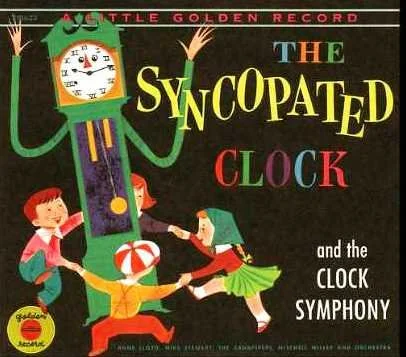
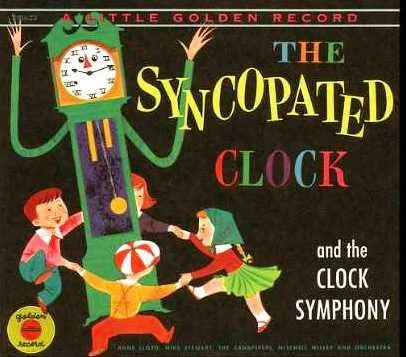
Leroy Anderson’s “The Syncopated Clock,” is a wonderful piece to establish this sense of time, because the beat is literally heard with a clock ticking sound and because it’s all about a clock and children will remember this very distinct melody. Now a little warning for the non-musicians. There is some moments in the music where the “ticking sound” stops, but it is actually a golden moment of learning for the child. You can take the opportunity to teach them that the beat (ticking) keeps going even though they didn’t hear it. This will build their musicianship skills at the same time.
Leroy Anderson’s “The Syncopated Clock.”
In This Lesson:
We will use a traditional Waldorf Math verse and sing it to the melody of “The Syncopated Clock,” to teach the concepts of what constitutes a minute and an hour and how time is made up of seconds.
We will keep a beat (the ticking) to represent the second, and use large circle movement to bring learning into the body.
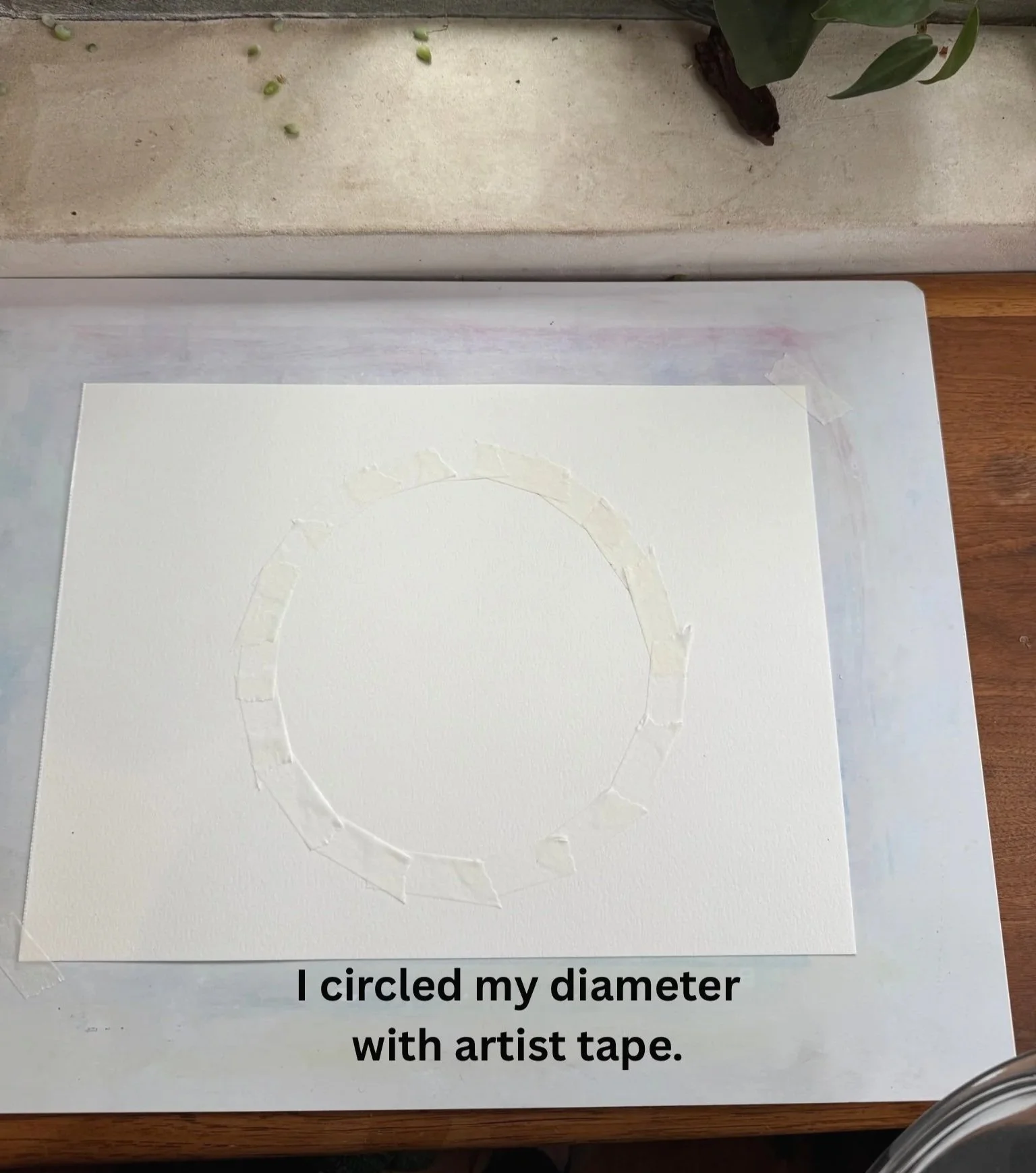
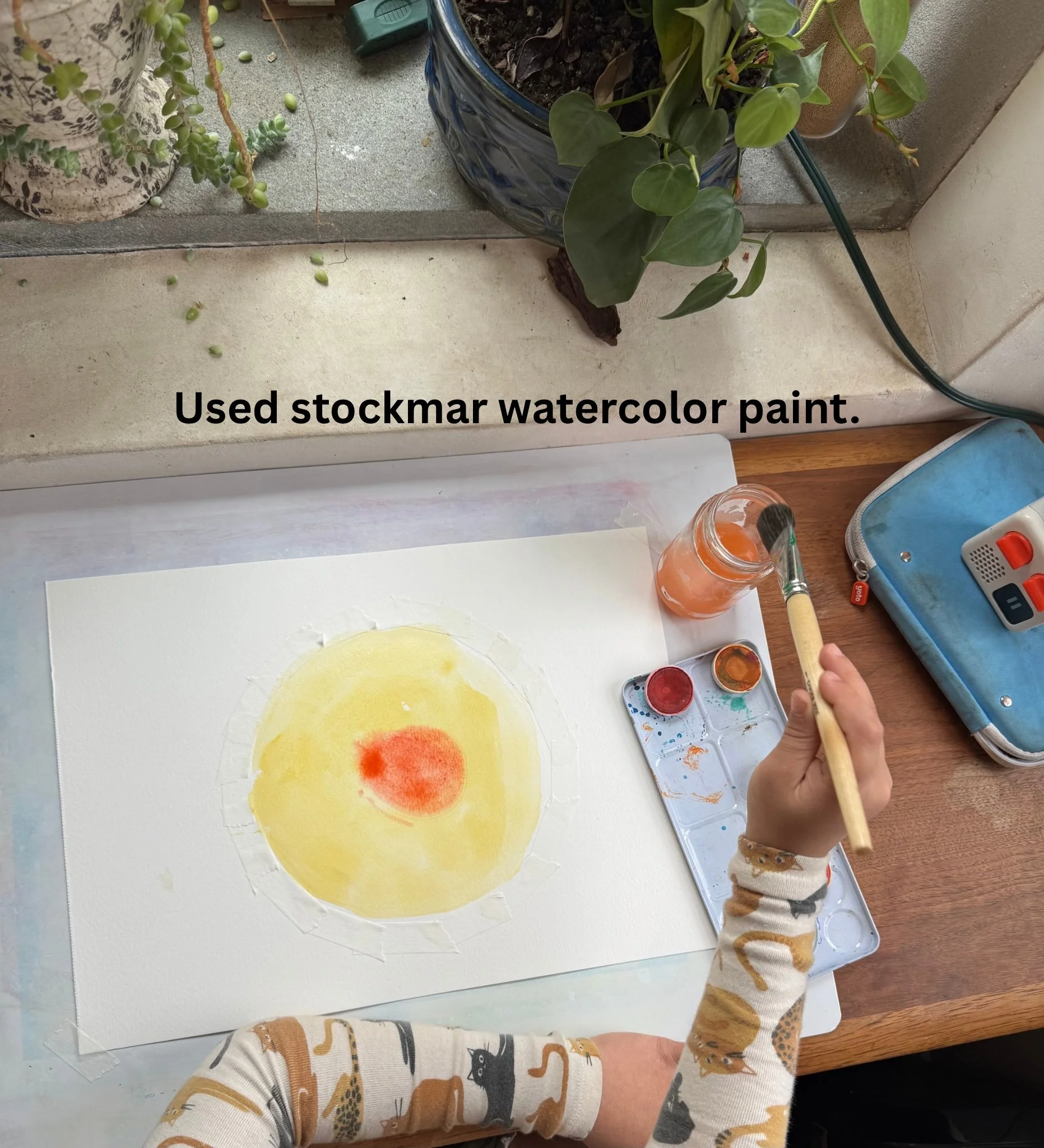
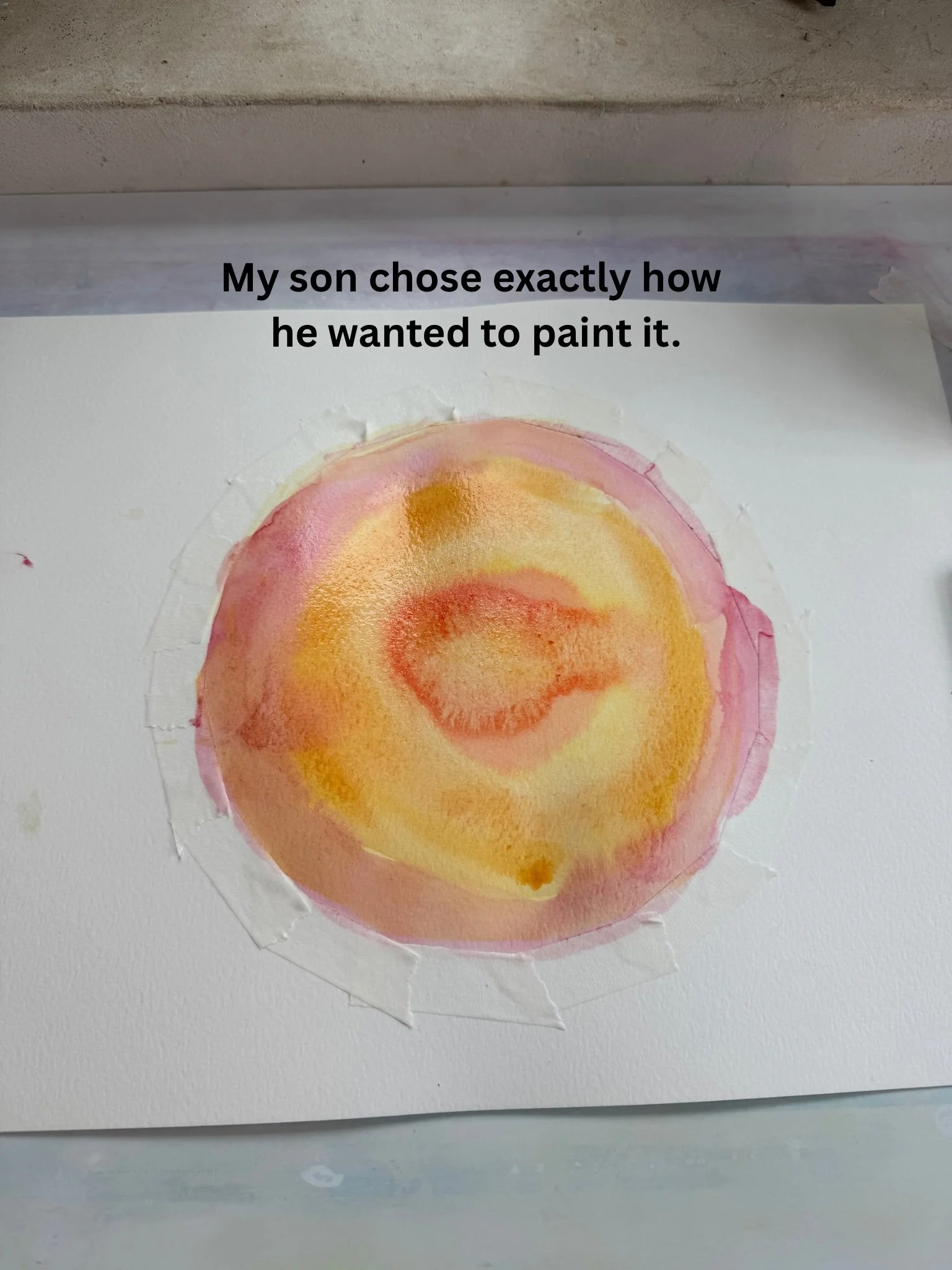
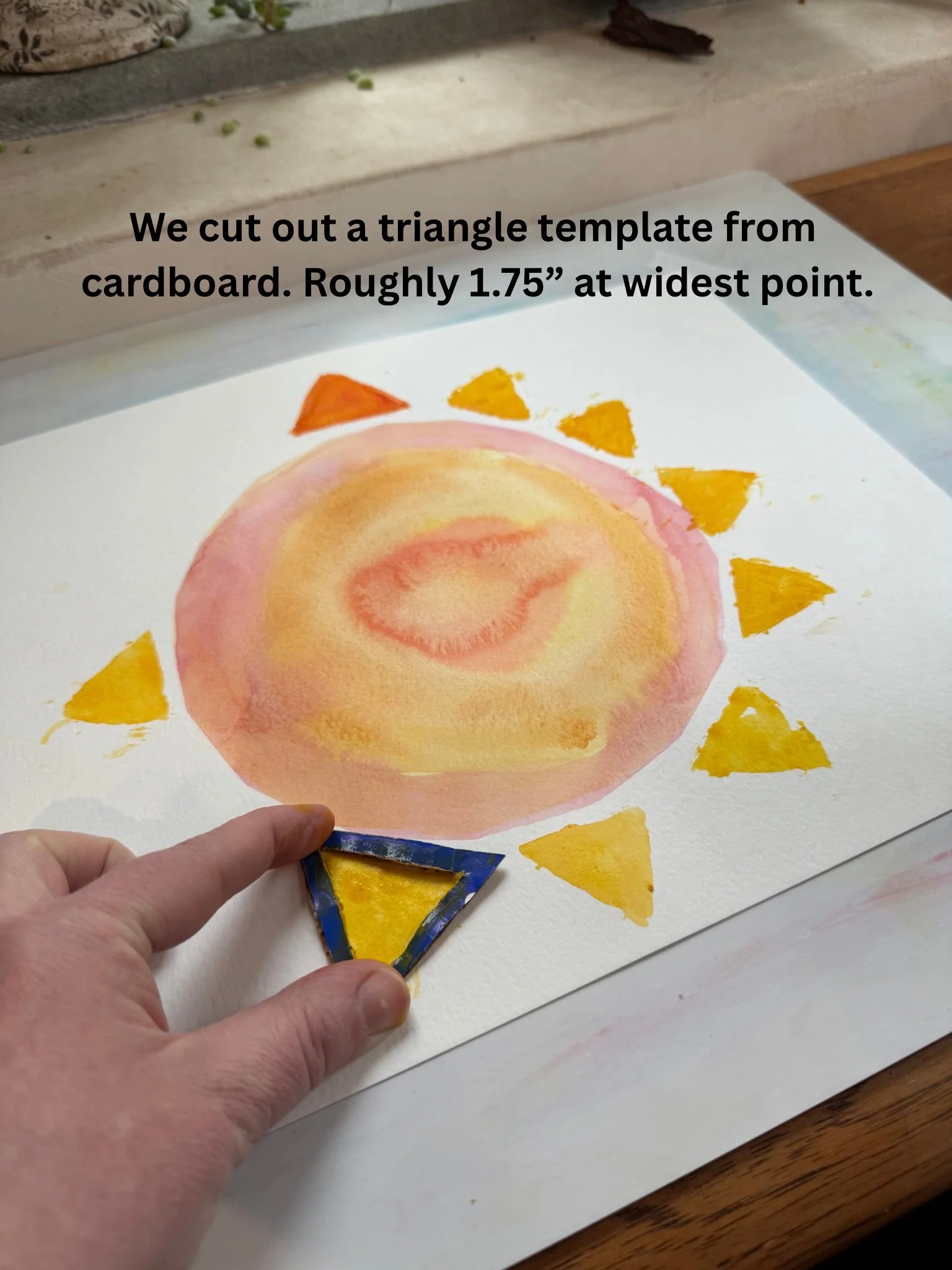
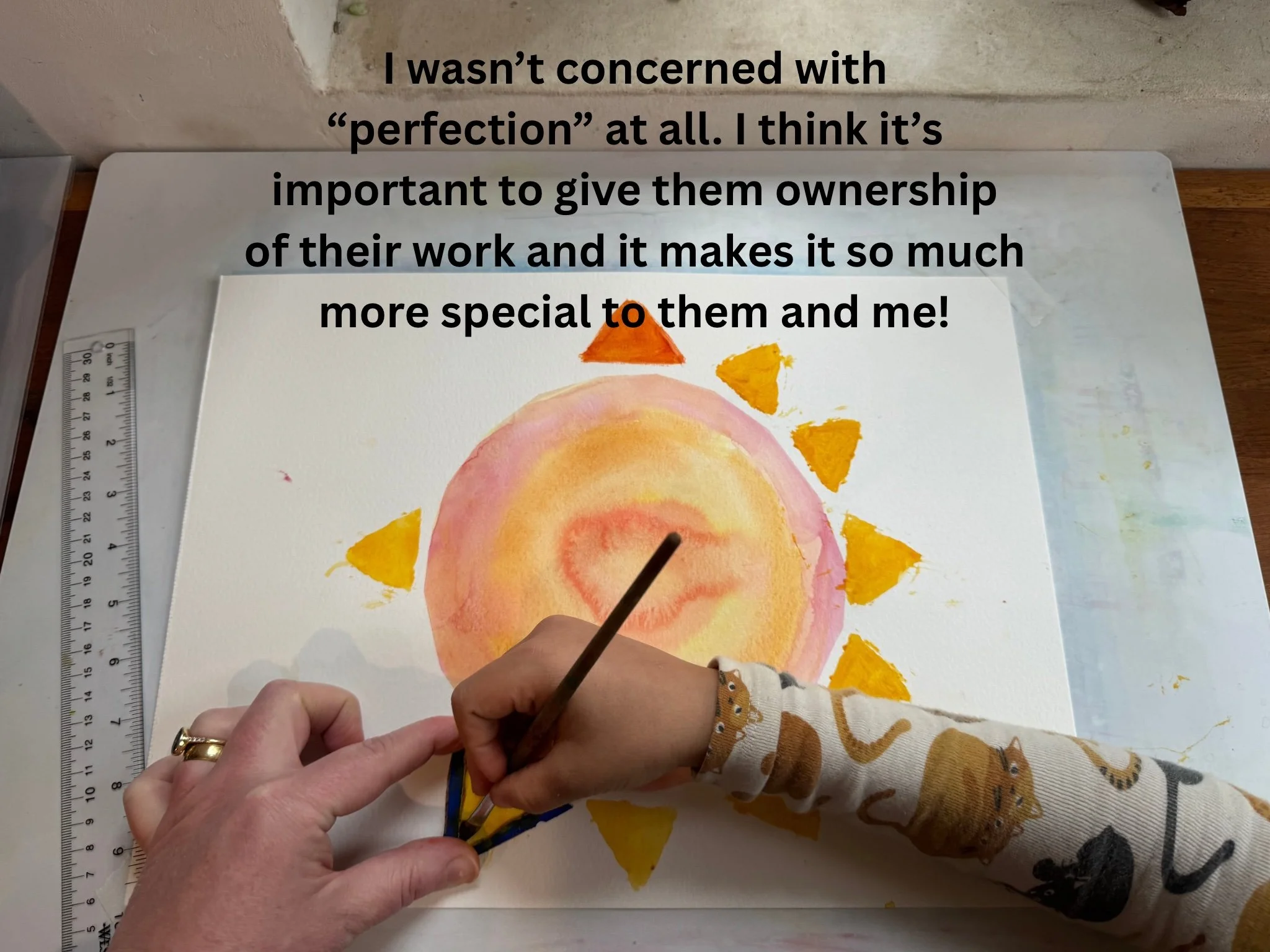
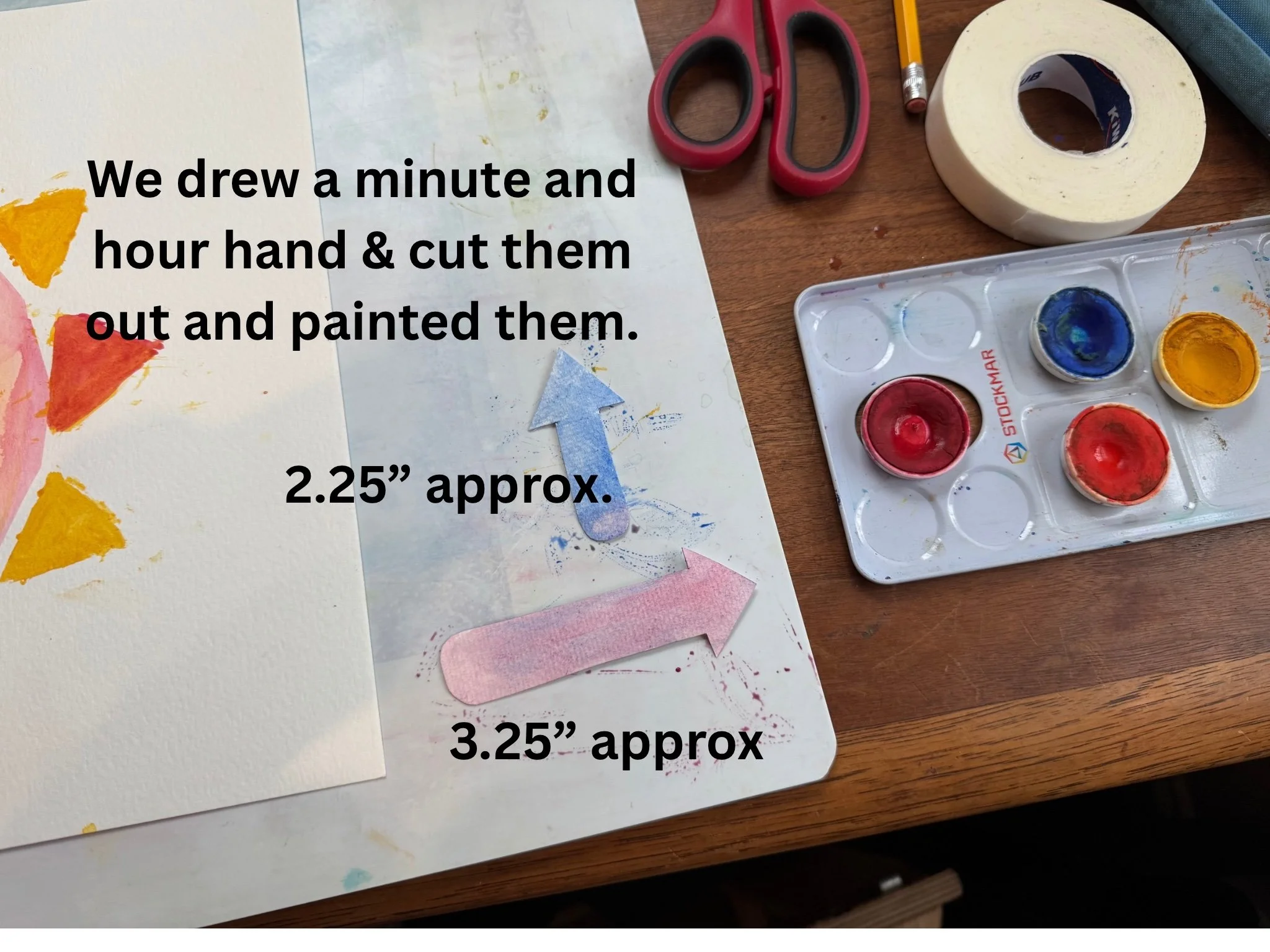
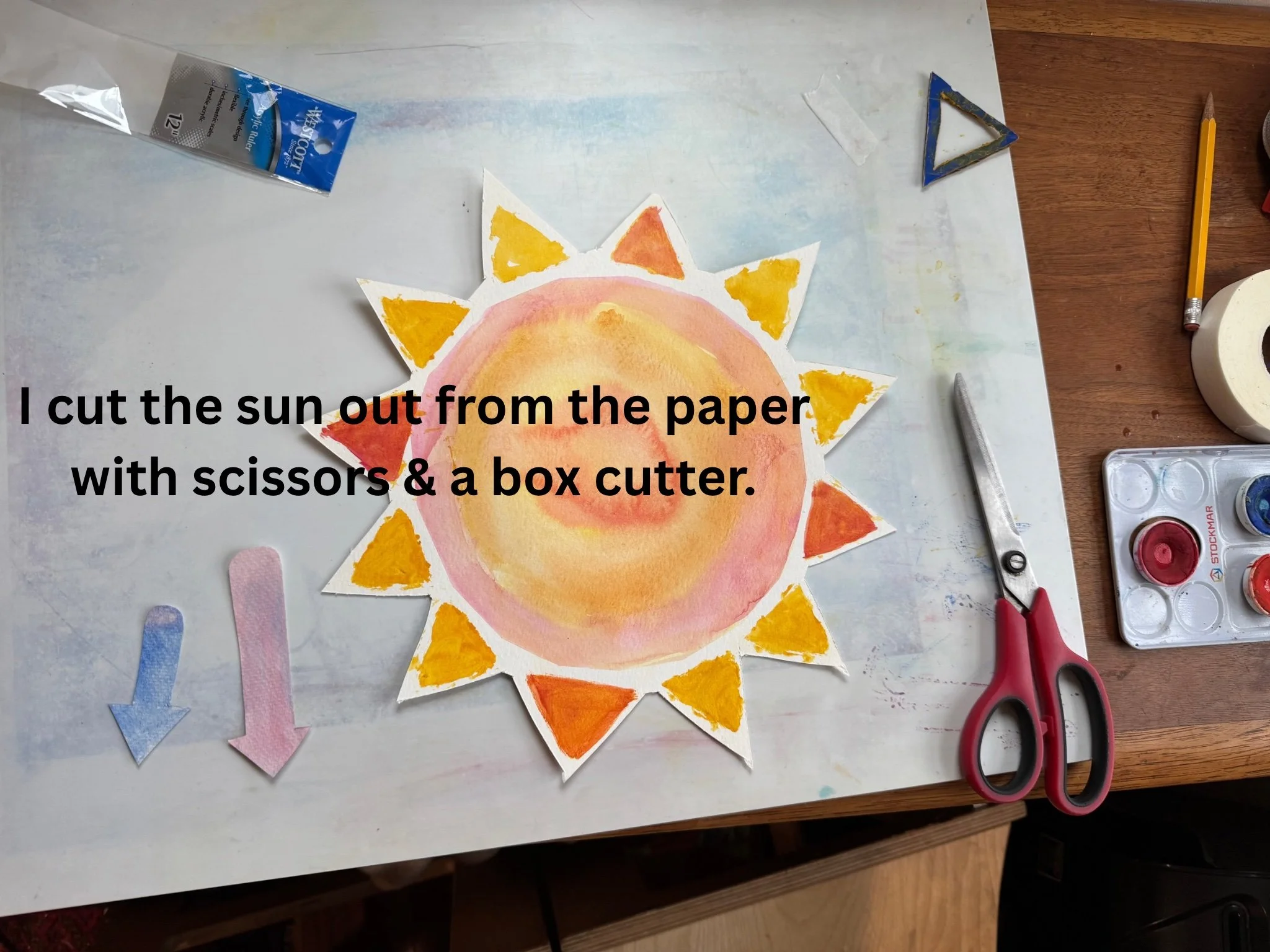
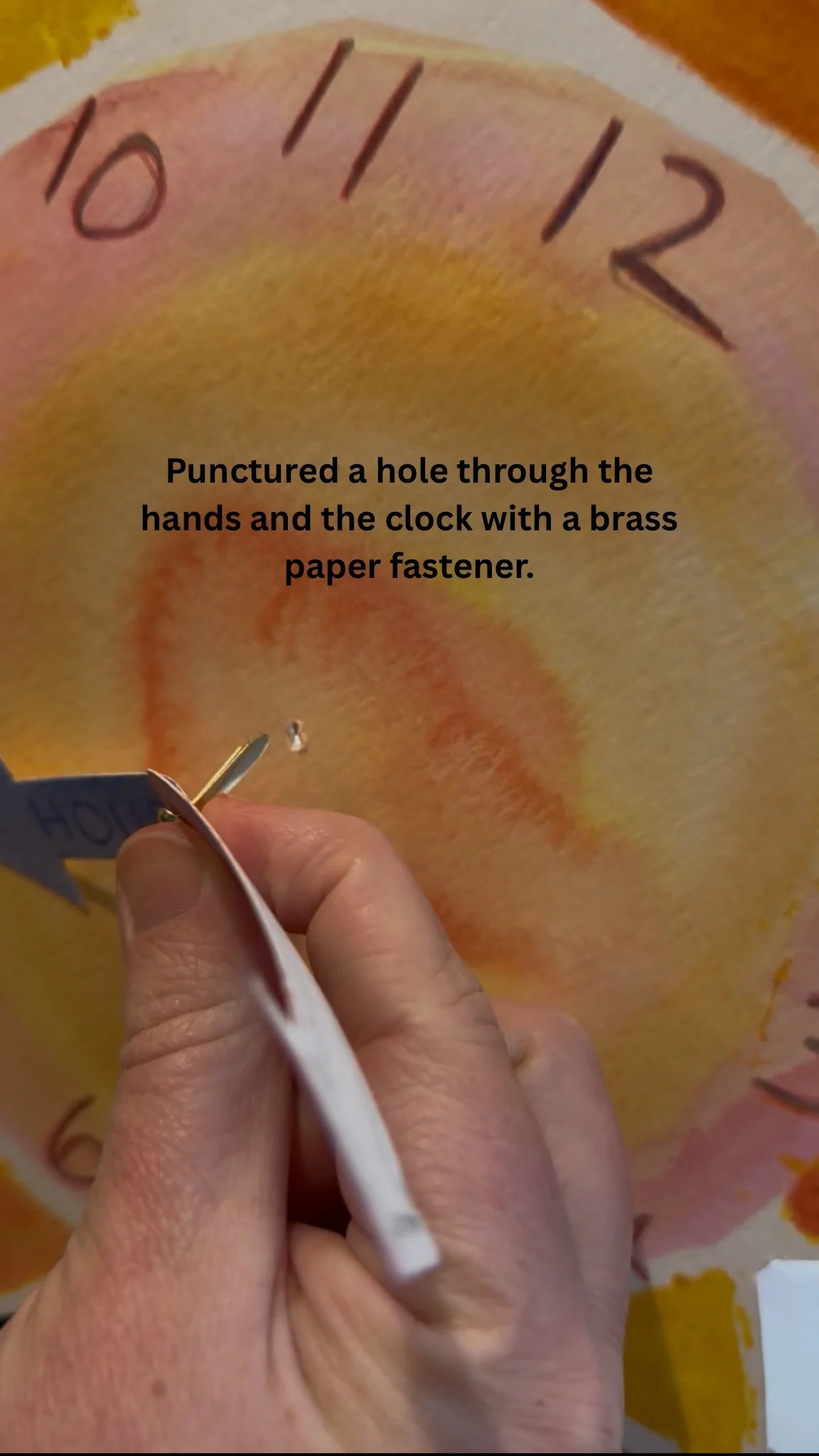
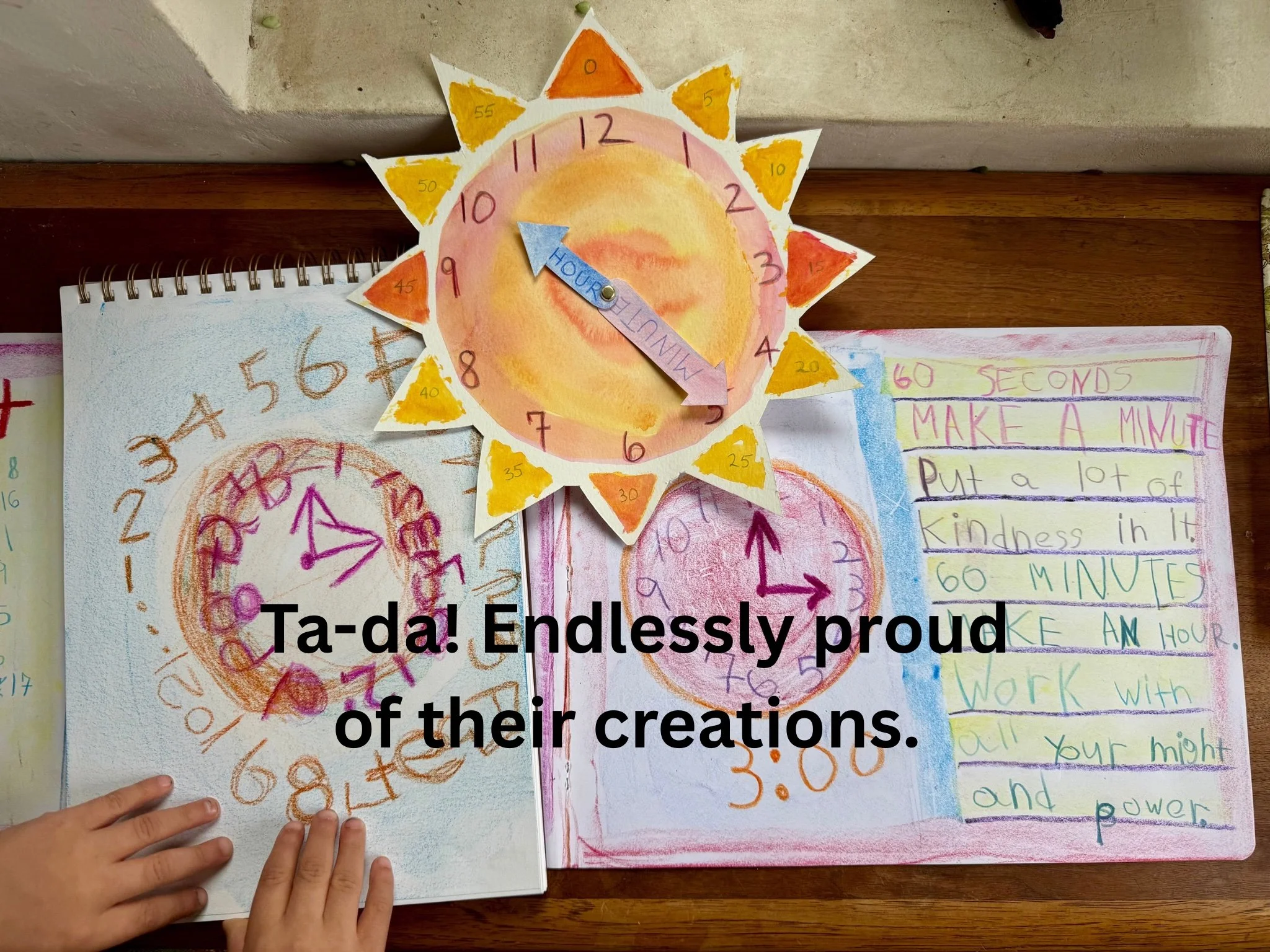
We will create a movable clock out of watercolor paper to make a useful learning tool that the child will be immensely proud of and will be useful for many months to come.
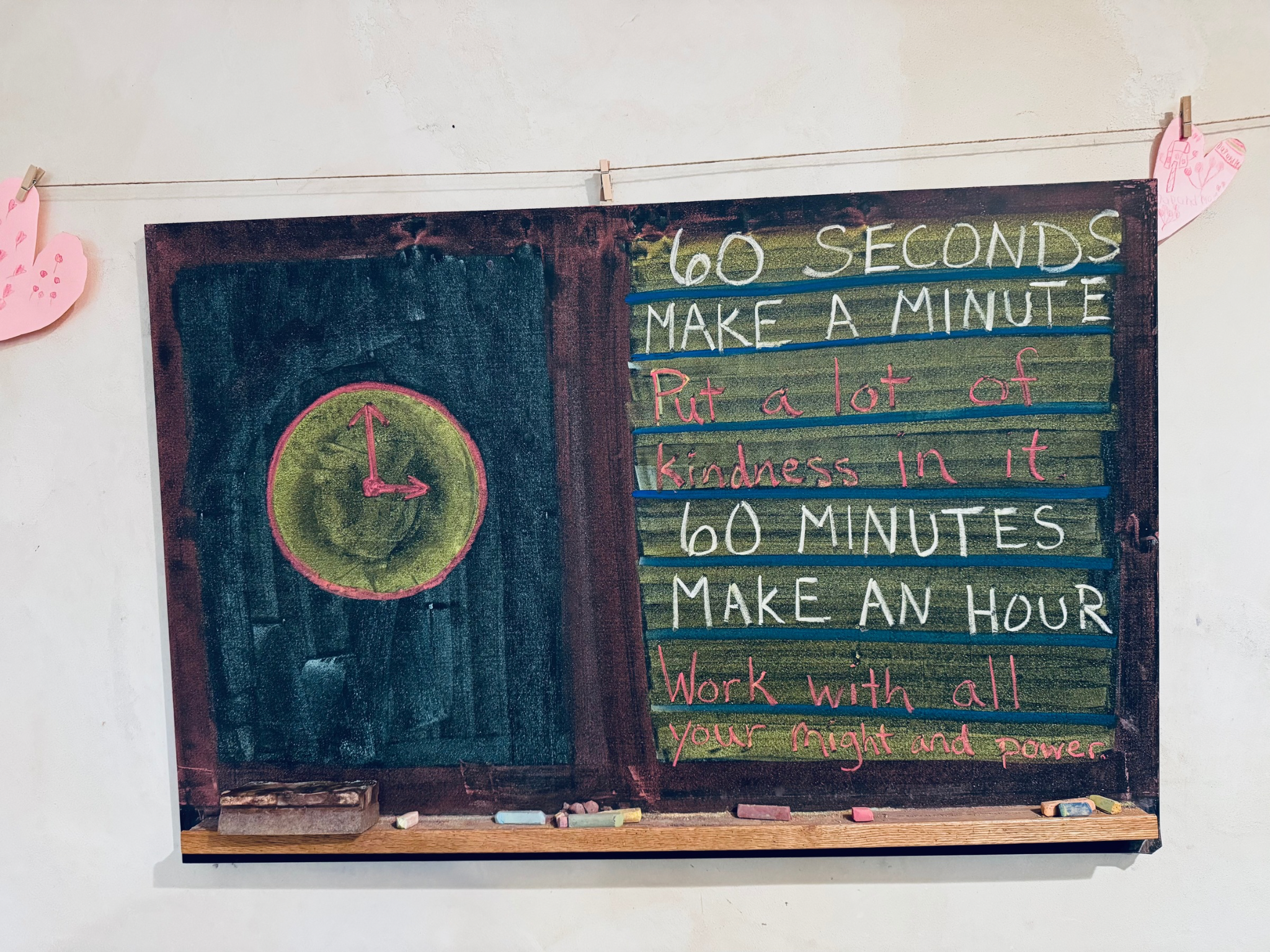
Waldorf Math Verse
By Dorothy Harrer
“60 seconds makes a minute,
Put a lot of kindness in it.
60 minutes makes an hour,
Work with all your might and power.
12 bright hours make a day,
Time enough for work and play.
12 dark hours through the night,
Give us sleep till morning light.”
Singing the Verse to the melody of “The Syncopated Clock.”
(Please excuse my 🤧 congested singing voice, as I am still recovering from a head cold. And please subscribe to my channel to help me make it to 1,000 where I can monetize. 🙏 )
Large Circle Movement
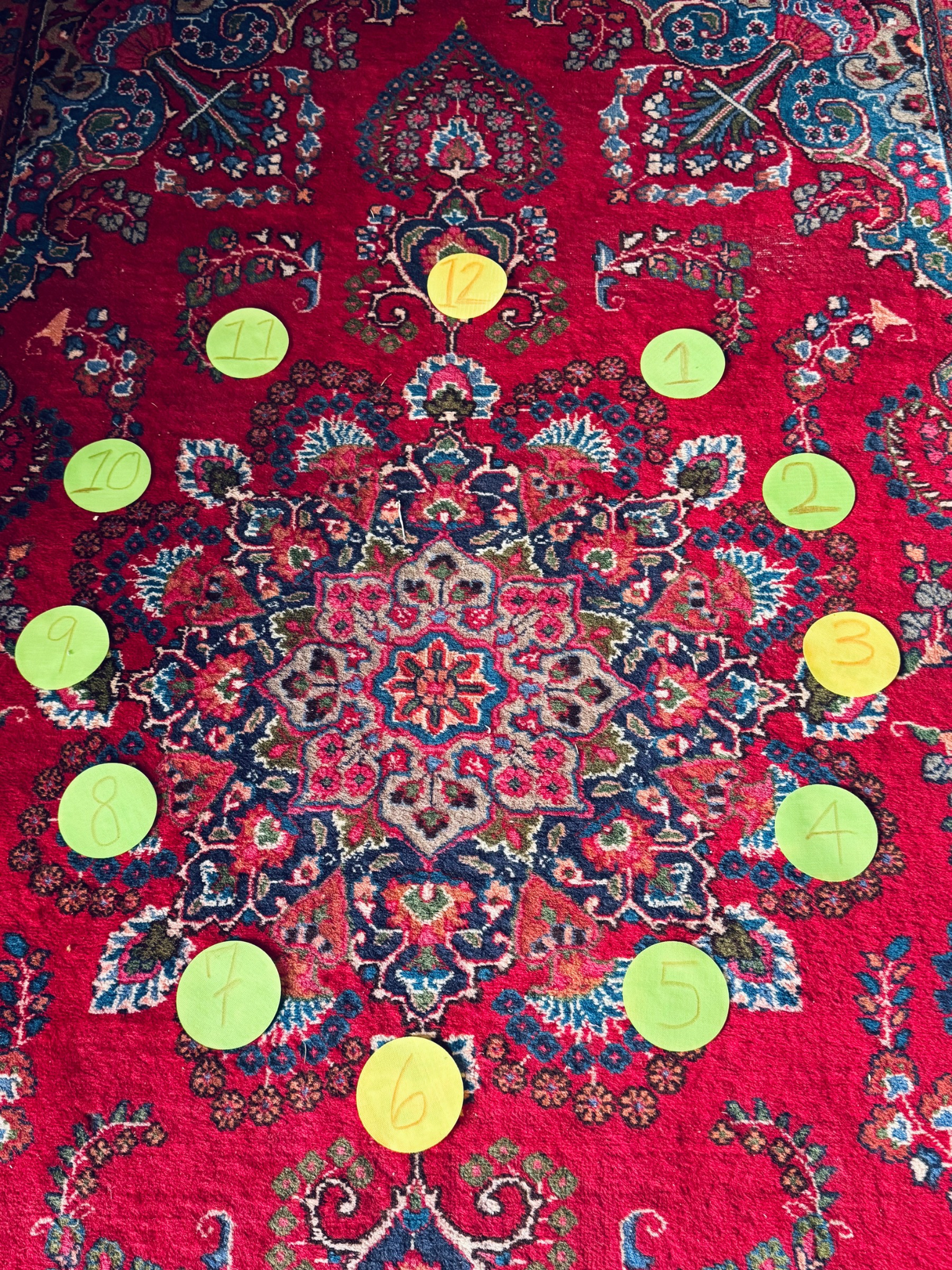
Create a circle on the ground using carpet stickers, street chalk, string, tape etc, that is big enough for them to walk around acting out the second hand of the clock.
Play “The Syncopated Clock” while walking rhythmically to the beat around the clock. You can even clap or use rhythm sticks to actively tick the beat. Reinforce that this is the seconds ticking by and make sure to keep moving and keeping the beat, even when the clock tick goes quiet!
Making a Movable Clock
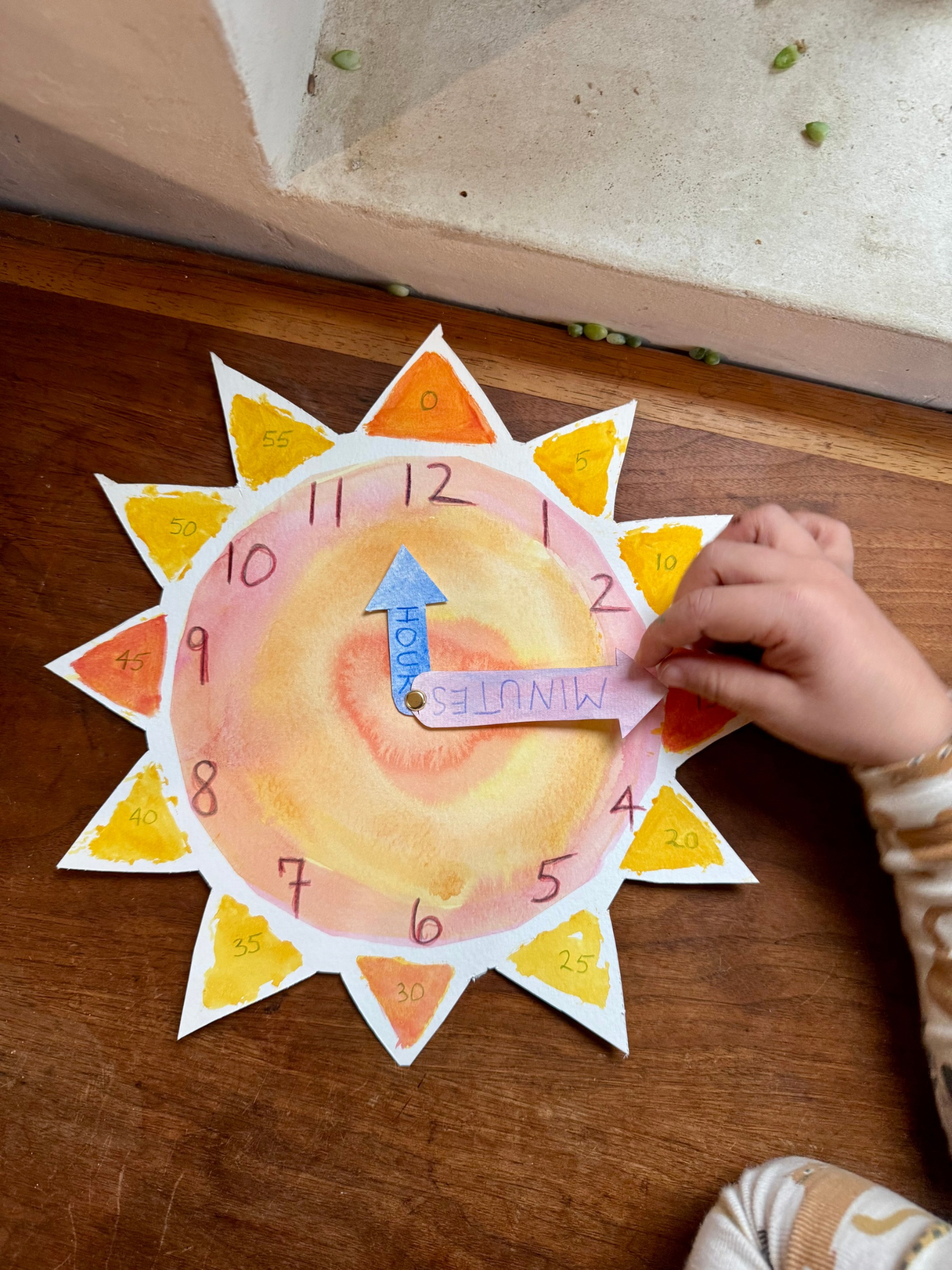
I got the inspiration for this clock from Pinterest. There are many amazing versions!
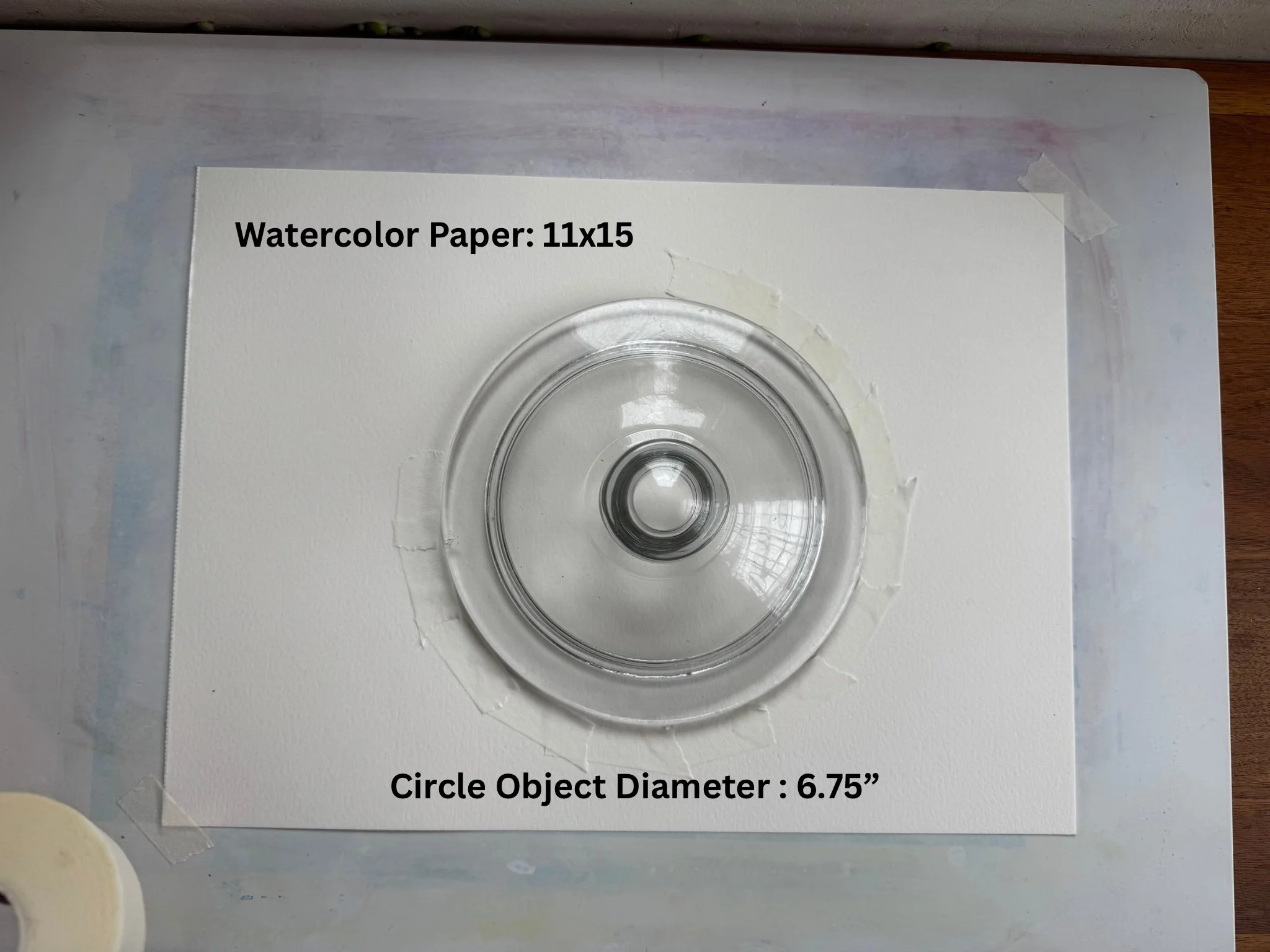
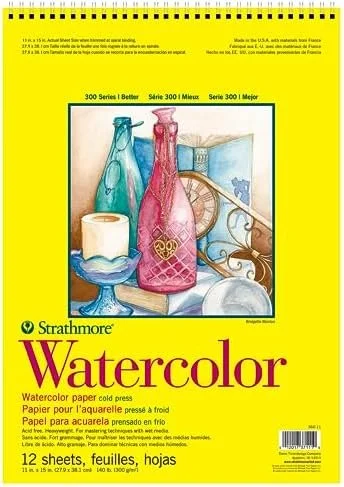
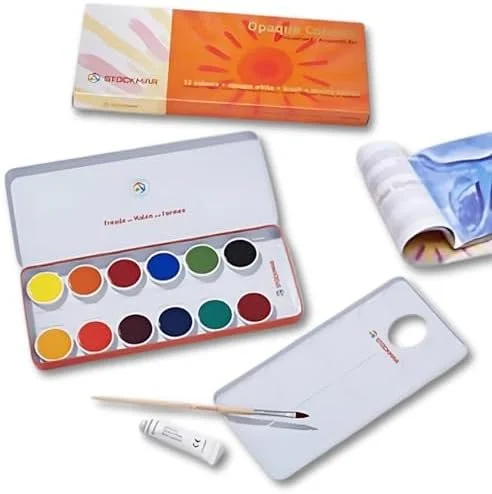
Supplies We Used To Make the Clock
This post contains affiliate links. If you purchase through them, I may receive a small commission - at no extra cost to you. Thank you for supporting my work!


If you would like to read more about our homeschooling journey, I wrote a blog post here.
If you enjoy my content, please consider sending me a “virtual coffee,” to help sustain this blog and enable me to create more wonderful free content! I so appreciate it, and am truly grateful for everyone who has supported my work either monetarily or by sharing it with others. Thank you!!